
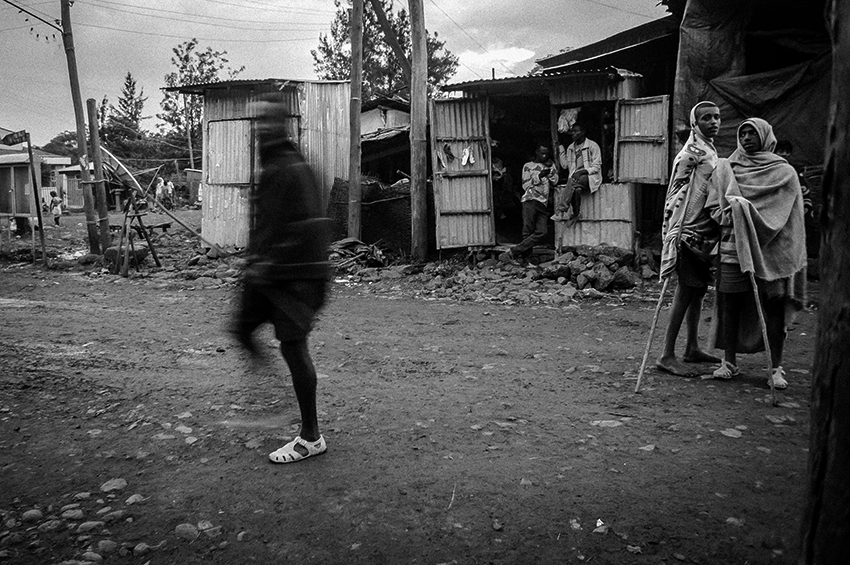
 La noche africana. La primera vez que viajé al Africa negra aterrizaba en Senegal procedente de Ginebra, donde vivía, para un rápido viaje de trabajo. Era de noche y todos dormíamos, recogimos obedientemente nuestras cosas y enfilamos el pasillo del avión, yo la primera. Abrieron la puerta y de repente una enorme bocanada de aire me envolvió, caliente, oscura, llena de olores intensos, prometedora de sensaciones sin fin, el olor de la noche africana. Nunca había sentido una cosa igual.
The African night. First time I travelled to Africa I landed in Senegal coming from Geneva, where I lived. It was a night flight and we slept, so we took our bags and lined up through the aisle, me the first one. The steward opened the door and suddenly a huge breath of air wrapped me, warm, dark, full of intense smells, promise of endless emotions, the scent of African night. I had never felt such a feeling.
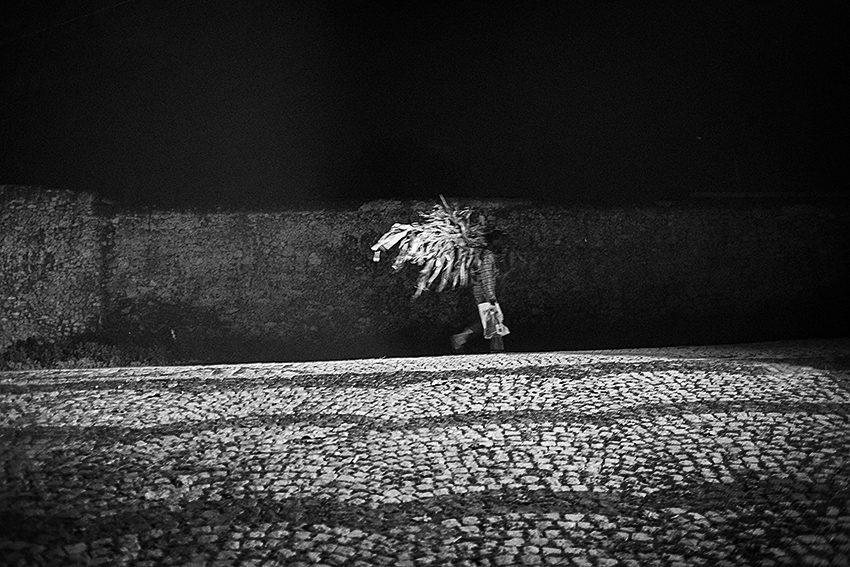
Fantasmas en la noche. Recuerdo como si fuera ayer mi segunda impresión de la noche africana. Había aterrizado en Nairobi procedente de Madrid cuando vi anunciado un vuelo a Entebbe, en Uganda, y siguiendo un impulso algo irracional cogí ese vuelo. El aeropuerto de Entebbe dista 40 km. de Kampala, la capital, así que no había más remedio que coger taxi. Era noche cerrada, y al poco de enfilar la carretera me percaté de unas sombras que se movían a ambos lados del camino. Rato después vi que las sombras se convertían en gente andando, muchas personas que surgían y se desvanecían en la oscuridad a medida que el taxi avanzaba. Esa visión fantasmagórica me impresionó hondamente. Después, en otros viajes a Africa, ya me acostumbré a la vista de gente que se desplaza andando al lado de las carreteras. Pero estas dos primeras sensaciones de la noche africana no me han abandonado jamás.
Ghosts in the night. I remember as if it were yesterday my second impression of the African night. I had landed in Nairobi coming from Madrid when I saw in the panels a flight to Entebbe, Uganda, and following a sudden boost I took that flight. Kampala is at a distance of 40 km. from Entebbe airport so I was forced to take a taxi. There was no moon, the night was pitch black and I begun to notice shadows moving along the road. After a while I saw that the shadows turned into walking people, lots of people emerging silently along both sides of the dark road, and that ghostly vision deeply impressed me. Afterwards, on other travels to Africa I got used to the vision of people moving along the roads. But I haven’t been abandoned by these first impressions of the African night.
To the English-speaking visitors of the blog, I apologize for my poor writing!
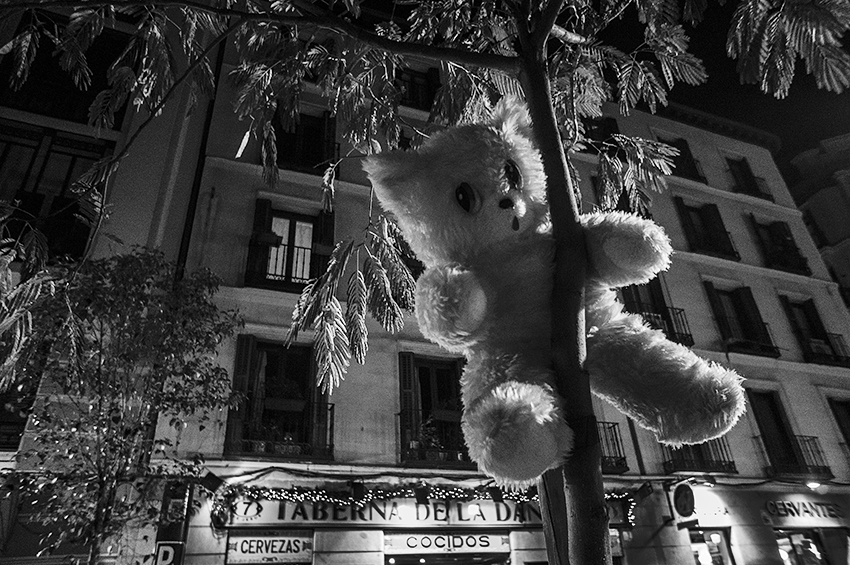 Este oso no parecía muy feliz, con esa expresión perpleja. Alguien lo había abandonado en un sitio absurdo e inverosímil, en la copa de un árbol, en una calle famosa por sus tabernas, en la mismísima puerta de la Iglesia del Cristo de Medinaceli. Esto, en vísperas de Navidad, de noche y con un frío intenso. En breve, estaba pidiendo una foto.


 Luisa's Photos